Deworming: problems under re-analysis

A flawed study on deworming children—and new studies that expose its errors—reveal why activists and philanthropists alike need safeguards.

The book Zen and the Art of Motorcycle Maintenance, of all things, offers a critically important message for people who work in development and philanthropy. “The real purpose of the scientific method is to make sure nature hasn’t misled you into thinking you know something you actually don’t know.”

Three new papers published today confirm this, by illustrating just how easily we can be misled by what we think we know, and just how much the power of the scientific method can safeguard us from continuing to be misled (and potentially investing significant time and effort on the wrong priorities). That’s because the three papers raise important questions about the practice of treating children for intestinal worms, which, in recent years, has become a darling of international development.
Continue reading

Posted in Effective giving, Great charities, Impact & evaluation, meta-research, transparency | Tagged , , | Leave a comment

What to when when you’re badly treated by a funder?

Jake Hayman was right in his recent blog Not Fit For Purpose: Why I’m Done With the Foundation World – there are major problems with charitable funding.

We can see this just from the fact that charities normally pay between 20p and 40p to raise £1, whereas companies pay between 3p and 5p. We can tell, too, from the remarkable unpopularity of many grant-makers in comparison to most people who hand out money.

But what do you do about it? This isn’t a rhetorical question: I’m asking for actual examples. What have you – you! – done in the past when you’ve felt badly treated by a foundation? Do you write to the chief executive? To the chair? Rant on Twitter? Just bitch about them privately? And what happened as a result? If we collectively had more stories and examples (evidence, of a sort) about what works and what doesn’t in terms of influencing donor behaviour, perhaps we could solve much of this. Continue reading

Posted in Uncategorized | Leave a comment

A welcome public row about donor effectiveness

Well done Malcolm Gladwell. On Wednesday this week, Harvard announced its biggest gift ever, $400m from the American hedge fund manager John Paulson for its school of engineering and applied sciences. Gladwell ridiculed it: ‘It came down to helping the poor or giving the world’s richest university $400 mil it doesn’t need. Wise choice John!’ Various other financial overlords sprang to Paulson’s defence: ‘My first thought was: ‘Wait a minute, pal, how much have you given?’’ said one; ‘Would they criticize him if he just sat on his wealth and ‘compounded it’ like certain others?’ said another; and a third said ‘Who the f— can criticize a guy who donated $400 million to his alma mater?!”… What’s to criticize? Extremely generous and he is to be applauded.’

Opportunity cost, that’s what to – well not criticize but to question – and effectiveness along with it. Charities vary wildly in how effective they are: with the same amount of resource, some achieve results, some achieve nothing, some achieve masses, some make things worse. The choices which donors make – like the one Gladwell is calling out – are highly consequential. Continue reading

Posted in Uncategorized | Leave a comment

Is grantee / beneficiary feedback a substitute for RCTs?

The short answer is no. At first sight, it seems that randomized controlled trials (RCTs) and Constituent Voice (CV: a good way of gathering feedback from programme beneficiaries or grantees) could substitute for each other because they both seek to ascertain a programme’s effect. In fact they’re not interchangeable at all. An RCT is an experimental design, a way of isolating the variable of interest, whereas CV is a ‘ruler’ – a way of gathering information that might be used in an experiment or in other ways. Continue reading

Posted in Effective giving, Impact & evaluation, meta-research | Leave a comment

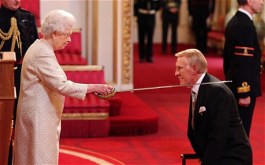
Do gongs from HM Queen make any difference?

This article first published in Third Sector Magazine.

It’s June, which brings the Queen’s official birthday, and perhaps this year you – like many charity sector people before you – will get lucky and appear in the Birthday Honours list. If so, arise, Sir or Dame Reader, for I have an important task for you.bruce-620-2_2024652c

This auspicious occasion presents an opportunity to find out whether Her Majesty’s gongs actually make any difference. We currently don’t know, despite all the sound and fury about them.  Continue reading

Posted in Uncategorized | Leave a comment

Why I support AllTrials & suggest that you do too

This article was first published by The Life You Can Save.

Alessandro Liberato was suffering from multiple myeloma and trying to decide whether to go through the trauma – for the second time – of a bone marrow transplant.

There were four [clinical] trials that might have answered my questions, but I was forced to make my decision without knowing the results because, although the trials had been completed, they had not been published,” he said.

Alessandro’s predicament isn’t unique. Millions of patients like Liberato and their doctors are avoidably in the dark. Amazingly, fully half of all clinical trials are unpublished.

As a result, the effects of most medicines are effectively unknown,” says Dr. Ben Goldacre, who has studied the problem of why clinical trials often go unpublished. Continue reading

Posted in Uncategorized | Leave a comment

Helping mainstream donors to give better

If you want to give to, say, cancer and want to find a good charity in that, how can you currently find out which org is any good? Essentially you can’t: charity ‘due diligence’ is way too hard for almost any non-professional donor.
It matters since most £s given are given by ‘normal people’ (for whom philanthropy isn’t a job) and those people are the majority of donors. The pattern is the same in most developed countries. Those donors really don’t have much option but to give randomly or based on hear-say. 
We’ve thought long about fixing this, and are now moving to action. Our ‘strategy’ is to borrow other people’s homework: create & market a website which compiles the recommendations of (charities funded by) sensible grant-makers, & of independent analysts.
A brief paper outlining the concept is here. It’s very early days but you’ll get the drift. We’re very interested in your views: please send them to admin [at] giving-evidence [dot] com
Posted in Uncategorized | Leave a comment

The key barriers to strategic philanthropy are practical

This was published by Stanford Social Innovation Review in a series about strategic philanthropy.

Encouraging more strategic philanthropy is a behavior change exercise. Paul Brest and I are fellow travellers and co-conspirators in that mission. But his article implies that he and I see different barriers to achieving that change. (We may of course both be right.) Brest lays out the objections to strategic philanthropy and refutes them—and does so excellently. By contrast, the barriers which I see and encounter are primarily practical. 

To change donor behavior, we can usefully learn from the patron saint of “nudging,” University of Chicago Professor Richard Thaler, who first deployed behavioral insights in economics. He has developed two ‘mantras’ while overseeing ‘nudge units’ in various governments globally:

  • “You can’t make evidence-based policy decisions without evidence.”
  • “If you want to encourage some activity, make it easy.”

Strategic philanthropy comes out badly on both mantras: we have barely any evidence about either how to do it or the location or extent of most of the problems it might tackle; and (not unrelatedly) strategic philanthropy is not easy to do. Continue reading

Posted in Effective giving, Impact & evaluation, Uncategorized | Leave a comment

Behavioural insights are rocket-fuel for charities

Few people can claim that their work has been used routinely to inform or improve fundraising, reproductive health, the governance of African countries or road safety, or to help people to get jobs or quit smoking; but the US economist Richard Thaler can. He has the rare distinction of having revolutionised a major discipline, and in his new book, Misbehaving: the Making of Behavioral Economics, he recounts how he did it.

Thaler realised that much of what economics says about how people behave conflicts with how we actually behave. Predictions which collide with observation are bad news in science. He suspected that economics would make better predictions if it absorbed insights from experimental psychology. This resulted in the new discipline of behavioural economics, which has since become mainstream.

Behavioural insights become rocket fuel when they are applied to social and development problems, and to public policy. They are useful to charities in at least three ways. Continue reading

Posted in Effective giving, Fundraising, Impact & evaluation | Leave a comment

Charities should get good at research uptake

Every school child knows that vitamin C prevents scurvy. But how long was it from when James Lind, a Scottish naval surgeon, made that important discovery in 1747 until the British Navy started providing fruit juice to sailors? At that time, scurvy was killing more sailors than military action, so answer is surprising. It was 38 years.

‘Research uptake’ as this has become known, is hard. Luckily it’s becoming a discipline in its own right, which looks at both its strands: uptake by governments in policy, and uptake by front-line practitioners. Charities and charitable funders produce research and insights which we aim to have ‘taken up’ in both strands.

The scurvy story shows how it’s not enough ‘just’ to be right – even if the insight is vitally important to national security and cheap to implement. This year’s BBC Reith Lecturer, the doctor Atul Gawande, talked about how his Indian grandmother died of malaria well after chloroquine was discovered to be a prophylaxis. The news must travel to where it’s needed. Continue reading

Posted in Effective giving, Impact & evaluation | Leave a comment