Lessons during the decade since the Asian tsunami

This article first appeared in Third Sector

It’s 10 years this December since the Indian Ocean Boxing Day tsunami. We salute those who died, those who mourn, those who tended; and we celebrate those who’ve since sought to improve response to disasters and emergencies: they’ve been remarkably effective.

For doctors in unfamiliar situations, the first port of call is The Cochrane Collaboration, a huge set of high-quality reports that collate and synthesise the (reliable) evidence about what to do. Its Cochrane Reviews are produced by more than 34,000 researchers in 120 countries, most of whom do them voluntarily, coordinated by a small band of experts from a tiny office in a residential street in north Oxford.

The day after the tsunami, the former co-chair of the collaboration, Mike Clarke, realised that The Cochrane Library, where the reviews are published, was pretty unhelpful for disaster situations. Reports on fractures might assume you’re in a first-world hospital with several hours to spare per patient. You’re not, and you don’t: you’re in a makeshift field hospital with patients queueing up. Worse, relevant Cochrane Reviews are scattered, filed under umpteen categories, and you’ve got no time to search and a dodgy internet connection. And some reviews are paywalled. Continue reading

Posted in Impact & evaluation | Tagged , , , , , , , | Leave a comment

What constitutes good evidence?

Lovely interview, about what constitutes good evidence, which donors is this relevant to, doesn’t requiring evidence impede innovation or encourage donors to focus on short-term outcomes, etc. (Gets into English after about 2 minutes.)

This is the Forbes article which I reference.

Posted in Uncategorized | Leave a comment

Helping donors to give better

Maybe getting donors to give better is cheaper and easier than getting them to give more

Many people look at getting people to give more. Giving Evidence and the Social EnterpriseChicago cover Initiative at the University of Chicago Booth School of Business have been looking at getting donors to give better. Perhaps improving giving will achieve more than increasing it: For instance, the cost of raising capital for charities is about 20-40 per cent, against only about 3-5 per cent for companies, and charities turn away some donors who are fiddly to deal with. It may be easier to reduce that cost of capital than to raise the amount given. Plus, money doesn’t always go where it’s most needed: for example, about 90 per cent of global health spending goes on 10 per cent of the disease burden – maybe those donations can cheaply be re-directed.

Our white paper looks at at (i)what good giving is, i.e., what donor behaviours produce the best outcomes, and (ii)how to persuade/enable/nudge donors to do those behaviours. It collates what is known on these topics, and lays out many unanswered questions which would form a strong research agenda. [The Chicago Booth School of Business was recently ranked by The Economist as the best business school in the world. And its leading centre on decision science is highly relevant since decisions are so integral to giving.]
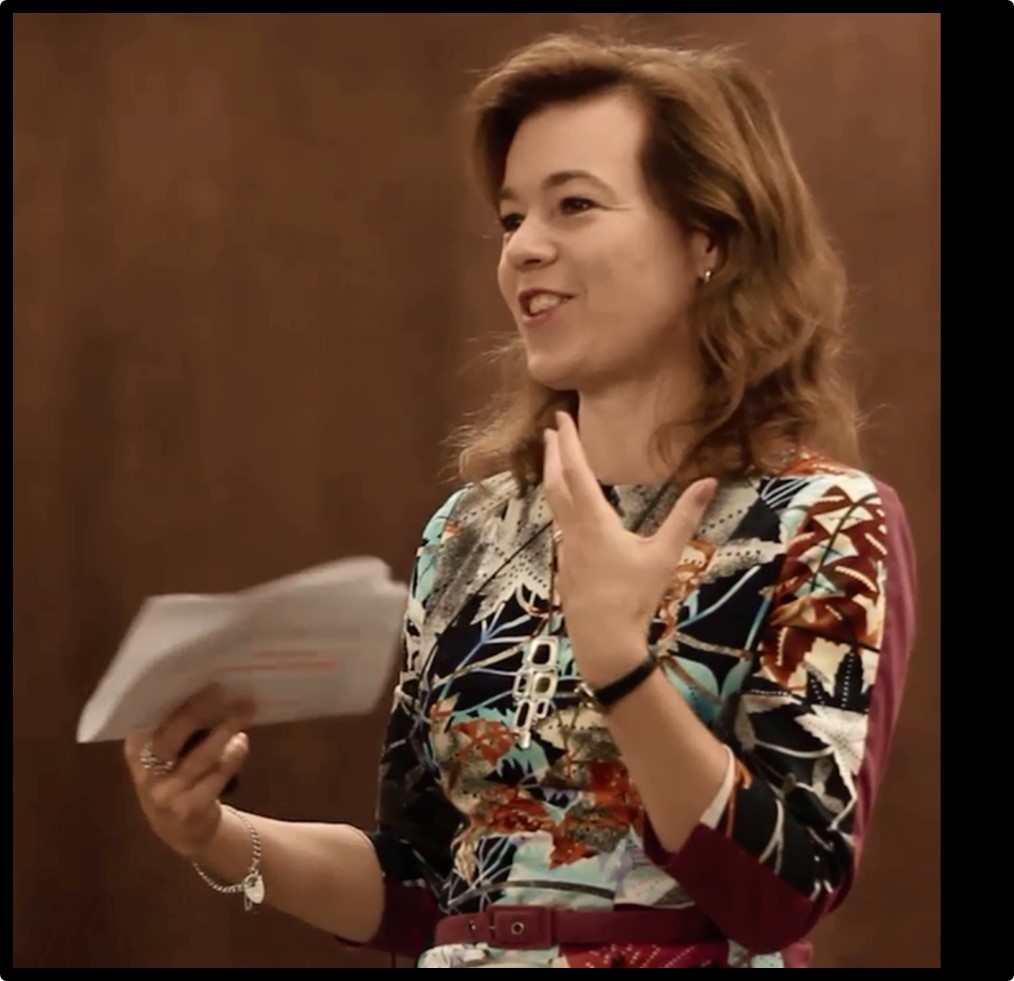
Continue reading

Posted in Uncategorized | Leave a comment

Caroline Fiennes: best philanthropy advisor

Newsflash! Giving Evidence’s Caroline Fiennes has been nominated a ‘best philanthropy advisor’ by Spears Wealth Management magazine, here.

The profile of Caroline (here) says: CF Barcelona

“Caroline Fiennes’ work in philanthropy focuses on making giving as effective as possible by basing it on sound evidence. A physicist in a previous career, Fiennes became interested in the fact that some charities are better than others and wanted to figure out which ones are most effective in order to guide donors to them. This is also true of ways of giving.

The founder of Giving Evidence feels there is ‘often a big mismatch between where the money goes and where it’s needed’, and advises clients on using the available evidence to choose issues and organisations to focus on and support in the most effective ways. Continue reading

Posted in Uncategorized | Leave a comment

Listening to those we seek to help

This article first appeared in Third Sector.

Unlike in business – where companies must heed their customers because they’re the sole

From a school wall in Zimbabwe, tweeted by Melinda Gates

source of funds – charities don’t normally get funds from beneficiaries and hence feel no financial pressure to listen to them. A recent report by Médecins Sans Frontières shows the result, recounting the apparent abandonment of war-torn areas and emergency situations by most aid agencies, which seem instead to follow funders’ wishes to operate in safer countries.

It’s tough for beneficiaries to tell an NGO, government or funder directly what they want or what they think of what they’re getting. It’s harder still for would-be beneficiaries. There are few feedback loops in our sector, though there is an outbreak of intriguing work to create more. Continue reading

Posted in Uncategorized | 1 Comment

Publishing the whole truth

This article first appeared in Third Sector.

The C&A Foundation – linked to the department store that closed in the UK but is flourishing elsewhere – joins a small clutch of non-profits this month that publicise the lows as well as the highs in their work.

It ran a programme in 18 garment factories in Asia designed to improve both working conditions and productivity. Some aspects worked in some factories, some aspects worked in others. Rather than taking the conventional option of reporting only the glories, in a kind of self-promoting publication bias, the C&A Foundation is publishing it all: data from each factory, correlation coefficients, statistical significance tests and operational challenges all feature in the report, which is called Frankly Speaking. (Disclosure: I am a co-author.)

Likewise, Engineers Without Borders, a Canadian NGO, has been publishing an annual failure report since 2008. In each one, volunteer engineers recount tales of an error they made in the field. Yet, despite the praise for EWB and the obvious value of hearing the whole truth, EWB remains an anomaly. To my knowledge, it’s the only operating charity that publishes so candidly. When I asked its chief executive why it discloses when others don’t, he said: “Well, if your bridge falls down, it’s pretty obvious.” Indeed. By contrast, plenty of social programmes appear to work but are shown by sophisticated analysis not to work. The crime-prevention programme Scared Straight and some micro-finance programmes are examples of this. Continue reading

Posted in Impact & evaluation, transparency, Uncategorized | Leave a comment

Go see your MP

This article first published in Third Sector.

Why is so little policy based on sound evidence? Many voluntary organisations, academics and others spend time producing research in order to influence the government. There are some successes – but much policy appears to disregard the evidence.

Mark Henderson is head of communications at the UK’s largest charitable funder, the Wellcome Trust, and author of The Geek Manifesto, which calls for a more scientific approach to policy and politics. He says there’s little political price to be paid when MPs ignore the evidence. He also says that, in their constituencies, most MPs know the business people – who, after all, will ensure that people of influence have the benefit of their views – but rarely know the scientists. They probably don’t know the charity sector people either.

I am an advocate of evidence and hence often in meetings about the importance of getting evidence into policy with organisations such as the Alliance for Useful Evidence, the Institute for Government, the Hewlett Foundation or the National Institute for Health and Care Excellence. If Henderson is right, we’re all stuck in an echo chamber and missing a trick. Continue reading

Posted in Uncategorized | 1 Comment

Does the charity sector have a publication bias problem?

This article first published in Third Sector.

It’s hard to make evidence-based decisions if much of the evidence is missing or ropey. So it’s disastrous that the results of many medical clinical trials are missing, preventing doctors from using them.

It’s thought that fully half of all clinical trials remain unpublished. It’s not difficult to guess which half. Apparently, trials published by pharmaceutical companies are four times more likely to show that the drugs have a positive effect than identical trials conducted independently. So why is that?

Well, trials themselves don’t lie. Magically, however, the negative ones don’t get published. This publication-bias costs lives, yet is perfectly legal. Dr Ben Goldacre, author, broadcaster, campaigner and debunker of bad science, says that the near-fatal effects of the drug trial in Northwick Park hospital a few years ago – when all the men in the trial ended up in A&E with multiple organ failure – could have been predicted from results that were known but not published. Continue reading

Posted in Effective giving, Impact & evaluation | 1 Comment

Moneyball Philanthropy? Not Always

This article, by Ehren Reed of the Skoll Foundation and Caroline Fiennes, first published in Forbes.

Some charities are better than others, so we should find the good ones. On that we can all agree. We should support the charities that will be most effective in addressing the world’s pressing problems. And understanding that effectiveness requires measurement. But a reliance on quantitative analysis, which is helpful in understanding some charities, could prevent us from finding ones that are doing important, system-changing work.

The charities which are easiest to measure are those whose work is proximate to the beneficiary. They distribute mosquito nets to families in sub-Saharan Africa or deliver wheelchairs to disabled children. Their theory of change – the link between their work and the intended benefit – is simple. The intervention is well understood, the outcome is predictable, and most of the variables are clear. From a funder’s perspective, the risk is low.

These interventions are like machines, and advertise themselves as such. Three dollars in = one bed net out. Five pounds in = one case of diarrhoea avoided. Cause and effect are clear. They operate within a system in which the relevant factors are known. Continue reading

Posted in Effective giving, Impact & evaluation | Leave a comment

Don’t Die of Ignorance

This was first published by Third Sector, in Caroline Fiennes’ regular column.

It sounds pretty good – a programme that aims to break the cycle of poverty and illiteracy by improving the educational opportunities of low-income families through early childhood education, adult literacy support and parenting education. It has served more than 30,000 families and has run in more than 800 locations nationally. Would you put money into it? Might your organisation take it on? It sounds highly plausible and clearly has attracted considerable funding.

But research has shown that this programme had no effect at all. The gains made by children who were served by it were indistinguishable from those of children who weren’t. The money might as well not have been spent.

Let’s try another example – a policy that children who fall behind at school retake the year. Again, it sounds pretty sensible and is common practice in some countries. So should we do it? Continue reading

Posted in Analysing giving, Impact & evaluation, Uncategorized | Leave a comment